
Audit readiness is often treated as a later-stage problem. But the decisions that create audit friction usually happen much earlier, sometimes years before the first audit engagement begins.
How companies end up scrambling
The same pattern often repeats itself. A company reaches the point where investors, lenders, or potential acquirers expect audited financials, and suddenly the finance team is working backward through years of decisions that were never documented properly.
The issues are rarely complex. Each one is manageable when addressed early. Stacked together at audit time, they create significant friction, cost, and delay.
The first-audit checklist
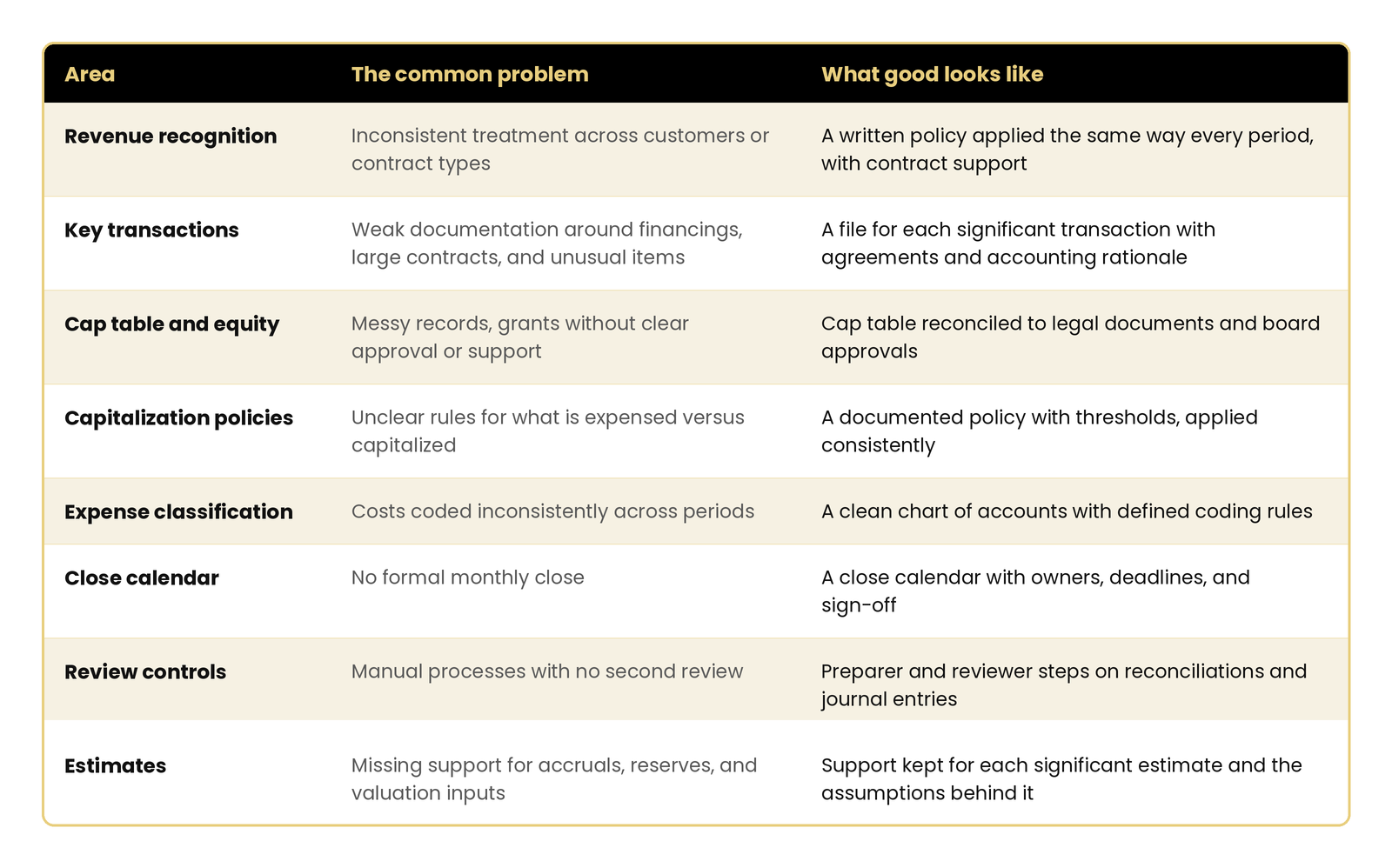
What the finance function needs to support
As companies scale, finance has to deliver more than bookkeeping and expand to:
Audit-ready financial statements
Consistent accounting policies
Clear documentation of transactions and approvals
Stronger internal controls
Board and stakeholder reporting
Defensible technical accounting positions
Reliable close timelines
You do not need a big finance department
None of this requires building a large team overnight. It requires being intentional about financial infrastructure earlier than most founders think is necessary. A fractional or full-time finance leader, a clean general ledger, and a monthly close discipline cover most of the ground at the seed and Series A stages.
A simple order of operations
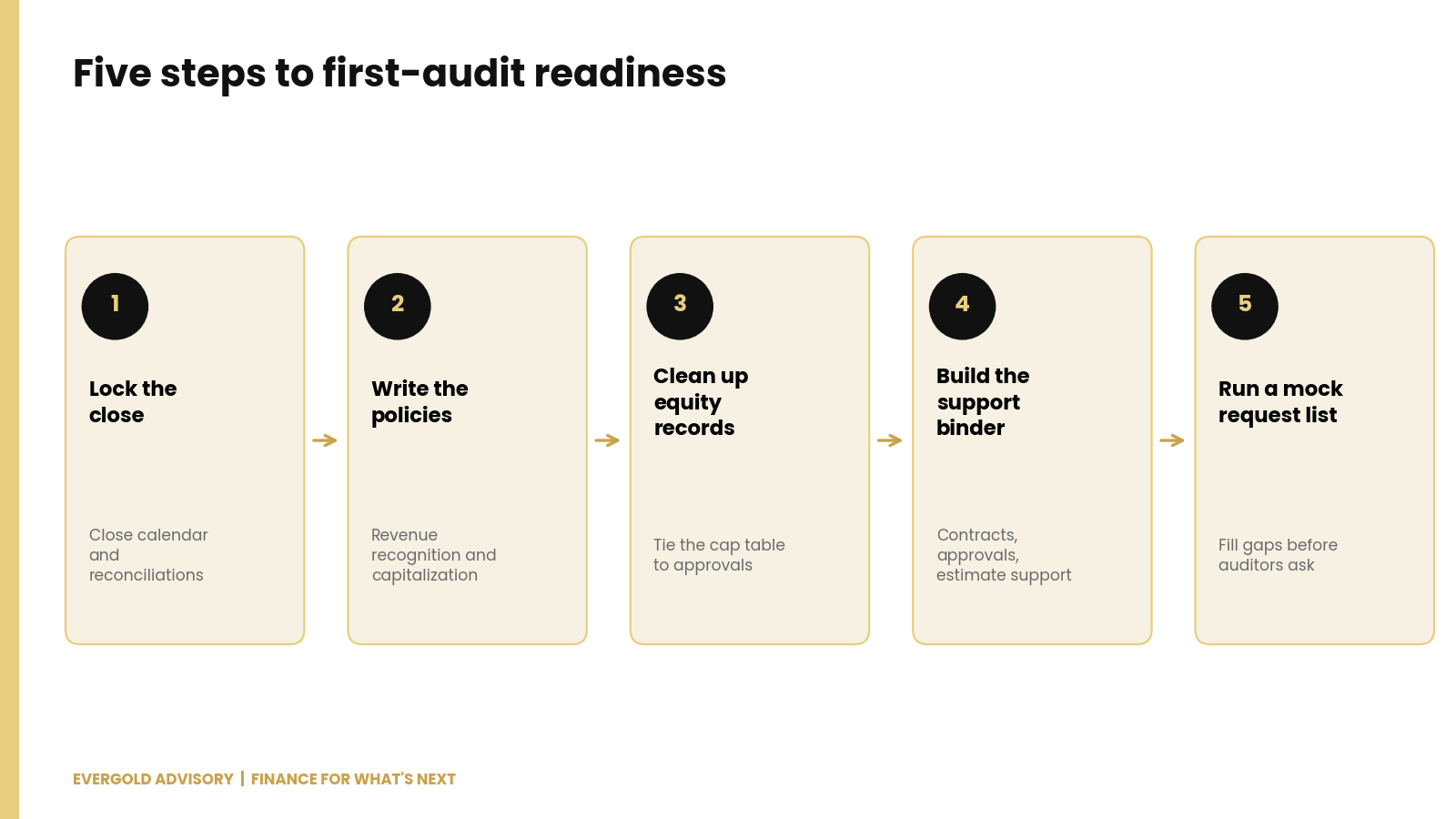
Lock the close first. A monthly close calendar with reconciliations is the base everything else rests on.
Write the policies. Revenue recognition, equity-compensation and capitalization first, then anything unusual in your business.
Clean up equity records. Tie your cap table to board approvals and signed agreements.
Build the support binder. Keep contracts, approvals, and estimate support organized by area as the year goes, not after year end.
Run a mock request list. Walk through the documents an auditor would ask for and fill the gaps before they do.
Bottom line
Audit readiness is not just about passing an audit. It is about building a financial foundation that can withstand growth, diligence, and institutional expectations without scrambling. For more on how we approach this, read our earlier post on audit readiness, or talk with us about preparing for your first audit.