
Every founder should have a financial operating system. It does not need to be overbuilt. The difference between founders who feel in control of their finances and those who feel behind usually comes down to cadence, not complexity.
The three-tier cadence
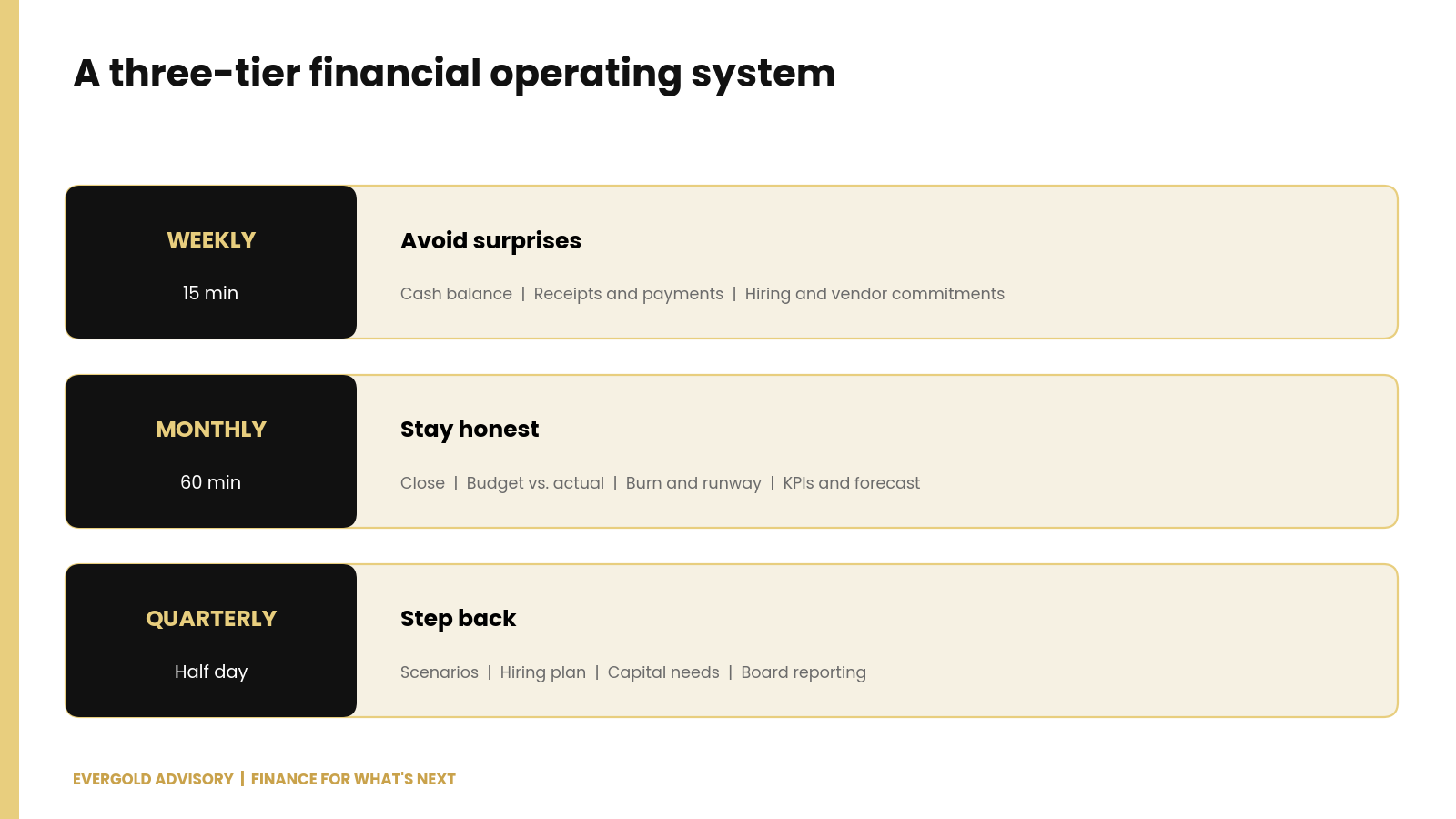
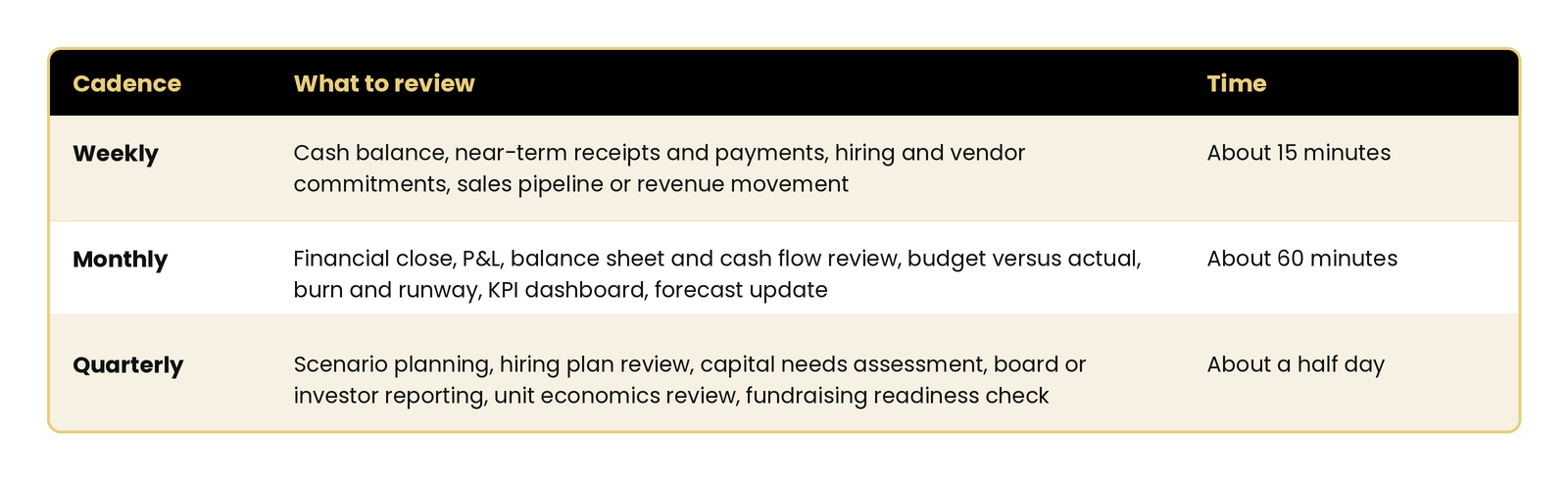
The weekly rhythm keeps you from being surprised. The monthly rhythm keeps you honest about performance. The quarterly rhythm forces you to look up from execution and ask whether the plan still makes sense.
The goal is decisions, not reports
Reporting for its own sake does not help. Too often founders get buried in dashboards they never use. The goal is decision-ready insight: the minimum set of information you need to make good calls about hiring, spending, fundraising, and growth.
If a number on your dashboard would never change a decision, remove it.
What each cadence is for
Weekly: avoid surprises. Know how much cash you have, what is coming in, and what is already committed. Check any new hire or vendor commitment against runway before it is signed.
Monthly: stay honest. Close the books on a set schedule. Compare actuals to budget and explain the variances that matter. Update burn, runway, and the forecast so the next month starts with current numbers.
Quarterly: step back. Re-run scenarios. Revisit the hiring plan against cash. Check whether you are on track for the next funding milestone and whether unit economics are holding.
What changes after a Series A
Once institutional investors join the cap table, expectations rise. Boards commonly expect:
A monthly close completed within roughly 15 days of month end
Budget versus actual tracking by department
A rolling 13-week cash flow forecast
Standardized quarterly board reporting
Financial governance is not red tape. It is how leadership keeps control as headcount and spend accelerate.
A starting setup for early-stage teams
The cadence runs on clean data. For pre-seed and seed companies, our standard starting point is QuickBooks Online for the general ledger, Gusto for payroll, Mercury or Brex for banking, and Carta for the cap table. Keep it simple, keep it consistent, and make sure someone owns the close.
Bottom line
As a company scales, finance should evolve from keeping records to guiding decisions. That evolution starts with a consistent rhythm. If you want to put this in place without building it yourself, see our bookkeeping and financial close approach or contact us to learn more about how Evergold can implement this for your business.