
Founders rarely run out of cash by surprise. They run out of time to fix the underlying mechanics.
The runway math most founders skip
Basic runway is simple:
Runway (months) = cash balance ÷ net monthly burn
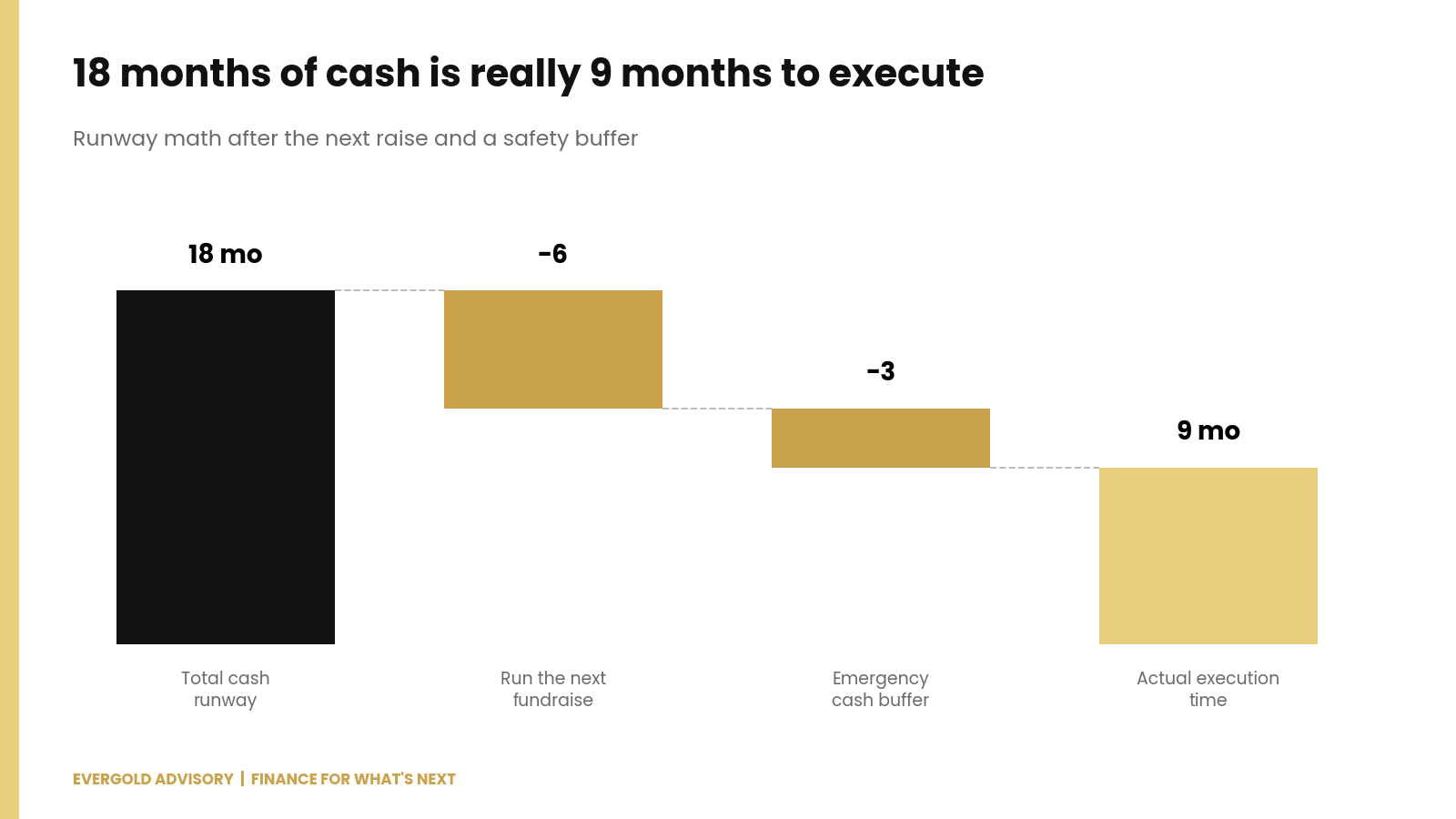
But the number on the spreadsheet is not the time you have to work with. When a founder closes an 18-month round, it feels like a year and a half to figure things out. The usable math looks different:
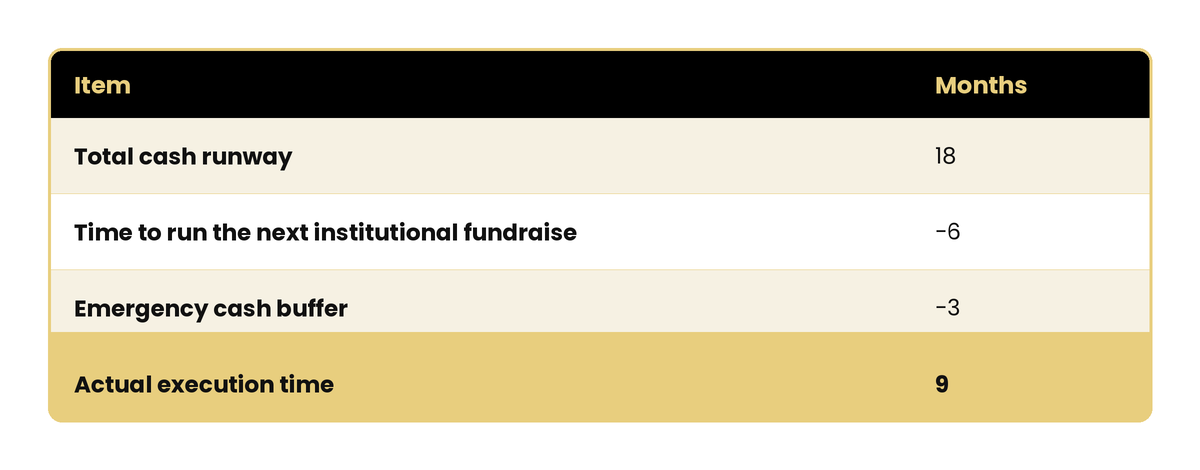
If your product roadmap or go-to-market cycle takes 12 months to show signal, you will run out of time before you have the data to raise again. Fundraising cycles that used to take 60 days are routinely taking six months, which makes this gap more real, not less.
Why companies run out of runway
The failure data tells a consistent story when you look at it together. In CB Insights' analysis of failed startups, 70% cited running out of capital, 43% cited poor product-market fit, and 19% cited unsustainable unit economics. Companies could name more than one reason. Carta has reported rising shutdowns across Seed, Series A, and Series B.
These are not separate problems. They share one operating gap: the company does not have a strong enough financial feedback loop.
The financial feedback loop
A financial feedback loop helps a founder see what is actually happening in the business, not what they hope is happening. It answers four questions in close to real time:
How is cash changing?
Which metrics are improving and which are deteriorating?
Does the current plan support the next milestone?
What decisions need to be made now rather than next quarter?
Without the loop, product-market fit issues show up as burn rate problems, and unit economics issues show up as fundraising problems. By the time the symptom is visible, the root cause is already old.
Where cash quietly leaks
Acquisition payback: fast growth burns cash when payback periods are long relative to upfront spend.
Working capital: revenue on paper does not help when receivables lag operating expenses.
Cohort churn: blended retention hides weak newer cohorts.
Runway timing: by the time burn feels urgent, the window to adjust without drastic cuts has closed.
Build a defensive scenario model
Hope is not a financial plan. A useful runway model includes:
A base case and a downside case. The downside should assume slower revenue and a longer fundraise.
Fixed versus discretionary spend. Know what you can cut quickly and what you cannot.
Hiring tied to cash milestones. Not to calendar dates.
A path to default alive. Know what it takes to reach breakeven if terms shift or capital is unavailable.
The founders who negotiate from strength are the ones who do not need a check by next month to survive.
Bottom line
The founders who build this loop early give themselves the one thing failed startups almost always lacked: time to course correct. If you want a runway model that holds up under investor scrutiny, our team builds cash forecasts and scenario models for venture-backed companies. Contact us to get started.